What 4D Pro is
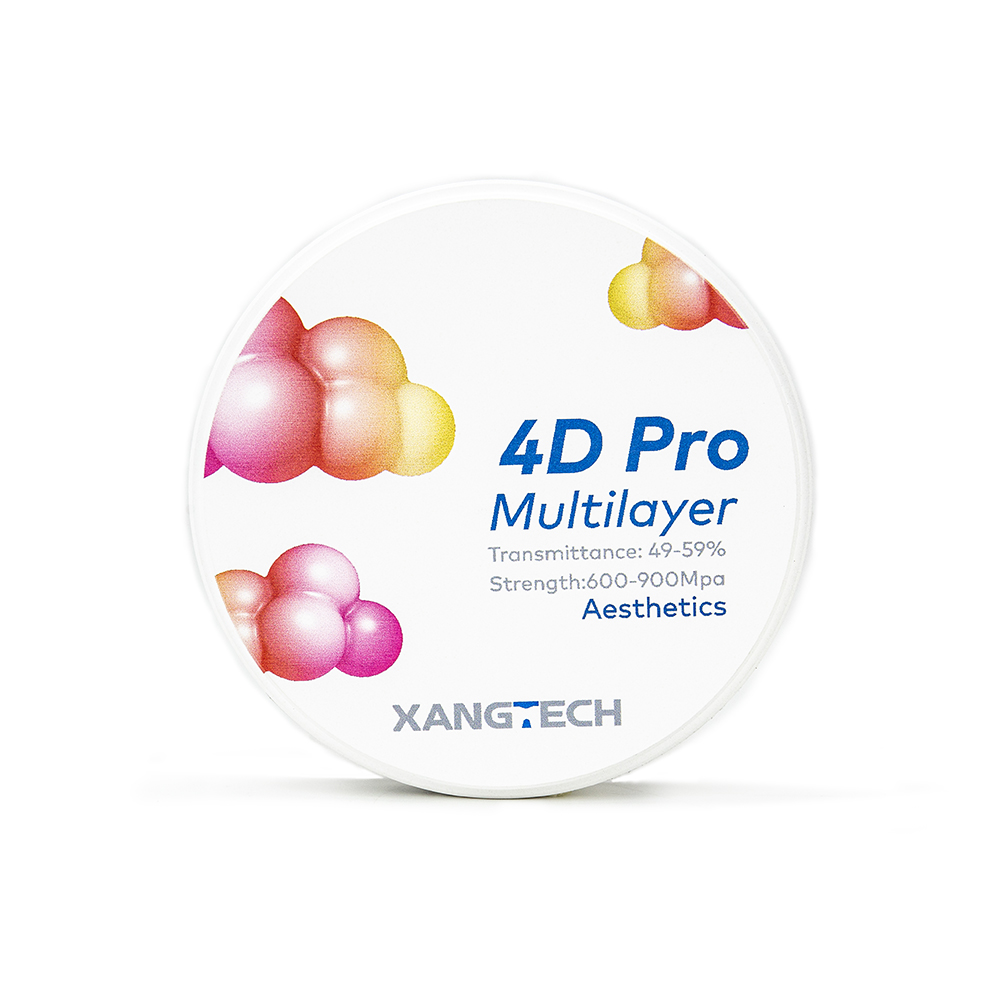
The 4D Pro Multilayer Zirconia Block, also listed as 4D Pro Aesthetics Multilayer Zirconia Block, is a multilayer zirconia disc in the XANGTECH restoration materials range. Its disc face carries the 4D Pro Multilayer name and the XANGTECH brand, with a colour gradient pattern that runs across the disc surface, and the official website product page image shows that pattern clearly. The name itself signals the product's position: a multilayer blank aimed at aesthetic work, where a gradient shade matters more than a single flat colour.
This page describes the product in the terms its source page uses, and goes no further. Ask for the strength, translucency, thickness and shade-range figures for this line in an inquiry. A buyer who needs a figure for a particular case should ask for it by name in an inquiry, and the answer can then be judged against the exact product and measurement requested.
The gradient on the disc
The disc image shows a gradient pattern across the face of the blank, which is the visual signature of the multilayer family: the shade changes gradually from one zone of the disc to another, rather than staying flat. In use, a crown nested inside the disc takes its incisal shade from one zone and its cervical shade from another, so the milled unit already looks layered before finishing. That behaviour is described here in general terms, because the exact zone layout depends on the disc and the nesting position chosen by the laboratory.
A laboratory considering 4D Pro should think about nesting before ordering, for the same reason. The shade at the edge of a finished crown depends on where the design sat inside the disc, so the nesting software and the technician's placement both matter. The multilayer family page discusses nesting in more detail, and an inquiry that names the software in use will get a more specific answer than a general question about the disc alone.
Where 4D Pro fits in a case plan
A gradient disc fits naturally into anterior work, where a flat shade is most visible, and into any case where the laboratory wants to reduce the staining step without giving up a layered appearance. Posterior work can also use a multilayer disc, but the gradient matters less there, and a laboratory may prefer a simpler family for a molar bridge. Those are planning directions, not prescriptions, and the final choice belongs to the technician who knows the case, the shade system and the patient's expectations.
The 4D Pro page also connects to the rest of the range. The disc is milled on a dental milling machine, sintered in a zirconia sintering furnace, and finished with zirconia burs and glaze paste, all of which have their own pages on this site. A laboratory ordering 4D Pro for the first time may want to confirm the milling and sintering combination in the same inquiry, so the whole chain is checked at once rather than discovered step by step.
Questions to settle about 4D Pro
Before ordering, confirm a strength class, a translucency percentage, a shade range, a disc thickness range and a sintering temperature for 4D Pro, naming the product and each figure in the inquiry. Also confirm a laboratory outcome, a shade match rate and a comparison result against any other brand's disc, if those answers matter for the case in hand. A buyer who confirms those figures before ordering can judge the disc against the exact product and measurement requested, and can order the right disc for the case.
The same restraint applies to certificates. The site states that certificates are available upon request, and a buyer who needs a document for 4D Pro in a particular market should name the product and the market in an inquiry. Ask for the certificate number, issuing body and scope for this line in an inquiry.
Comparing 4D Pro with 3D Pro
The other named multilayer line on this site is 3D Pro, and the two lines share the multilayer family page, the selection guide and the comparison page. Ask for the specification difference between the two lines in an inquiry. A buyer comparing the two should read both product pages, note the descriptions each one gives, and then ask the company which line matches a particular shade system, disc size or case type.
That comparison question is a good inquiry in itself. Name both lines, describe the case, and ask which line the company recommends for it and why, and the answer will reveal more than any catalogue table could. If the answer is that both lines suit the case, the laboratory can choose on availability and quantity, which are the practical factors that usually decide a first order anyway.
How to order 4D Pro
An order should name the product as 4D Pro Multilayer Zirconia Block, give the disc size and the quantity range, and note the shade approach the laboratory uses. Then confirm the minimum order quantity, the lead time, the shipping method and the payment terms for that order, as buyer instructions rather than as terms promised on this page. Those four confirmations vary by order and destination, and confirming them before payment avoids the most common cross-border friction.
A first order of a single disc, or a small quantity for testing, is a sensible way to check nesting, milling and sintering together before committing to a larger quantity. The inquiry form has room to describe that test plan, and a company that knows it is a test order can advise on the disc size and shade choice that will make the test most informative. The form asks only for a name, an email address and the message itself.