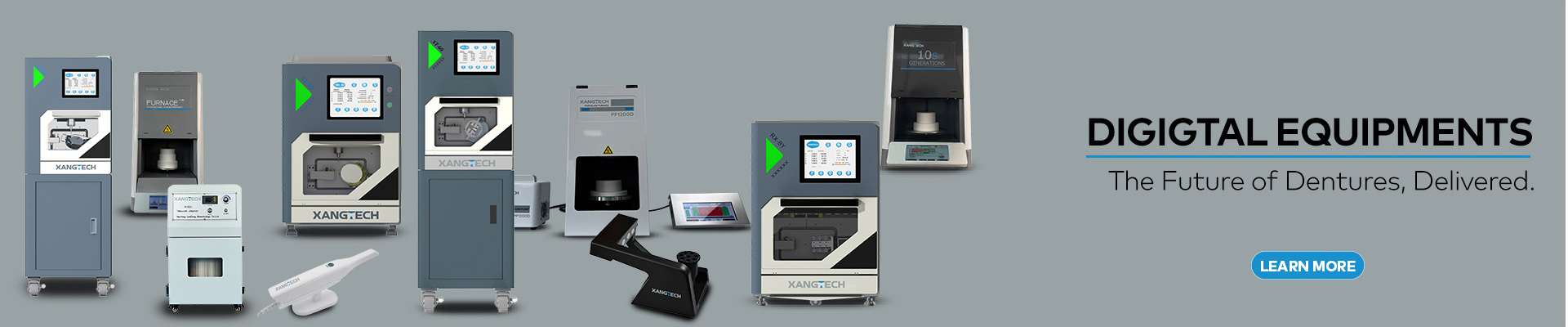
The digital chain in order
A digital case moves through four stages, and the equipment index follows them in order. Scanning captures the case, either with a 3D scanner for a model or an intraoral scanner for a direct mouth capture. Milling shapes the blank on a dental milling machine, with the XT-60 covering dry and wet work and the RX-8H covering metal. Firing follows in a sintering furnace or a porcelain furnace, and dust extraction runs alongside milling to keep the bench and the machine clean.
Presenting the chain in order helps a buyer who is equipping a laboratory from scratch, and also helps a buyer who is replacing one link. A laboratory that already mills well but fires slowly needs the furnace pages, not the whole index, and a laboratory that already scans well but mills by hand needs the milling pages. Each equipment page therefore stands alone, while the index shows how the pages connect.
Milling machines
The milling range contains two named machines: the XT-60 dry and wet milling machine, and the RX-8H metal milling machine. The XT-60 is the only product on this site with a specification table, because its source page published one in full, listing its size, weight, axis ranges, power, positioning accuracy, tool magazine, spindle speed, working pressure, voltage, machinable materials and processing types. The RX-8H page, by contrast, uses descriptive language only. Ask for its specification table in an inquiry.
That difference is not a judgement about the machines; it is a statement about the evidence available for each one. A buyer comparing the two should read the XT-60 table for what it says, read the RX-8H description for what it says, and ask the company about any RX-8H figure that matters for the decision. The milling machine buying guide compares the categories, dry milling, dry and wet milling, and metal milling, without inventing figures for the machine that lacks a table.
Furnaces: sintering, porcelain and press
The furnace range contains four category names: dental furnace, zirconia sintering furnace, porcelain furnace and press furnace, with two named products, the 12S fast sintering furnace and the PF1200D porcelain furnace. The 12S page describes a fast sintering furnace for zirconia, with the 11S big chamber furnace recorded separately and not merged into the same series, because the sources do not say the two are one series. The PF1200D page describes a porcelain furnace in descriptive language only.
Furnace choice interacts with blank choice, and the sintering furnace selection guide explains that interaction in general terms. A fast sintering furnace suits a laboratory that needs turnaround, while a porcelain furnace suits ceramic work that needs a different firing route, and a press furnace suits yet another route. Ask for the firing curve and temperature for the exact blank and furnace together in an inquiry.
Scanners: 3D and intraoral
The scanner range contains two category names, 3D scanner and intraoral scanner, with one named product, the XT-OS05 intraoral scanner. The 3D scanner covers model scanning in the laboratory, while the intraoral scanner captures the case directly from the mouth, and the scanner guide compares those two routes in general terms. A second intraoral scanner, XT-OS33, appears only in a home page news title. Ask about it in an inquiry.
Scanner choice affects the whole digital chain, because the capture quality sets the ceiling for milling accuracy downstream. A laboratory choosing between a model scanner and an intraoral scanner should read the scanner guide, consider the case mix it handles, and ask about compatibility with its milling software in an inquiry. The guide does not recommend one route in general, because the right route depends on the laboratory's cases and workflow.
Dust extraction alongside milling
The vacuum cleaner system, listed as a dental dust extraction system for zirconia milling equipment, is easy to overlook and hard to work without. Milling zirconia, PMMA and metal all produce dust, and extraction keeps the machine, the bench and the air cleaner, while also protecting the milled surface from debris. The vacuum cleaner page describes the system without a specification table. Ask for its specification table in an inquiry.
Extraction should be confirmed together with the milling machine in an inquiry, because the two work as a pair. A laboratory buying an XT-60 or an RX-8H for the first time should ask whether the extraction system listed here matches that machine, and what connection or capacity question needs answering. That combined question gets a more useful answer than two separate messages sent days apart.
Equipping a laboratory from this index
A laboratory equipping from scratch can use this index as a checklist: a scanner for capture, a milling machine for shaping, a furnace for firing, an extraction system for the bench, and the burs and consumables that keep all of them running. Each item has its own page, and the guides explain the choices within each item, so the checklist can be worked through in order without jumping between unrelated pages. The inquiry form can then carry the whole list in one message, with the quantity and destination questions attached.
A laboratory replacing one link can use the same index in reverse: find the category, read the product page, read the guide for that category, and then ask about the figure or compatibility question that the page leaves open. Either route ends at the inquiry form, and both routes benefit from naming the existing equipment alongside the new item, so the company can answer the combination rather than the item alone.